
Ask a Houston golfer about winter and you will hear two things. First, that it is the best time of year to be on the course: no heat index, no humidity, and fairways that finally feel like a place you want to be. Second, that somehow the clubs spend most of December in the garage. A cold front blows through, a week of rain follows, the holidays eat the weekends, and by February the swing you were building in October has quietly left town.
We love outdoor golf, and nothing in this guide changes that. The goal is simple: use the off-season, which in Southeast Texas is more of a shoulder season, to keep improving so the first warm Saturday of spring feels like a continuation instead of a restart. Here is a practical plan for fall and winter golf practice in the Houston area, built around the way real golfers actually live.
Houston is a golf town in winter, and that is the point
Our mild winters are a real gift. Plenty of local golfers play year round, and the cooler months are when the Spring and Klein courses feel their best. A simulator is not a replacement for any of that. Think of it as the reliable second half of your golf week: the place you go when the course is not an option, or when you want to work on one thing without a group waiting behind you.
That second half matters more than most people expect. The golfers who improve fastest are rarely the ones who play the most rounds. They are the ones who get the most useful repetitions, and a round of 18 holes only gives you a handful of swings with any single club. An hour in a bay gives you dozens, with numbers attached.
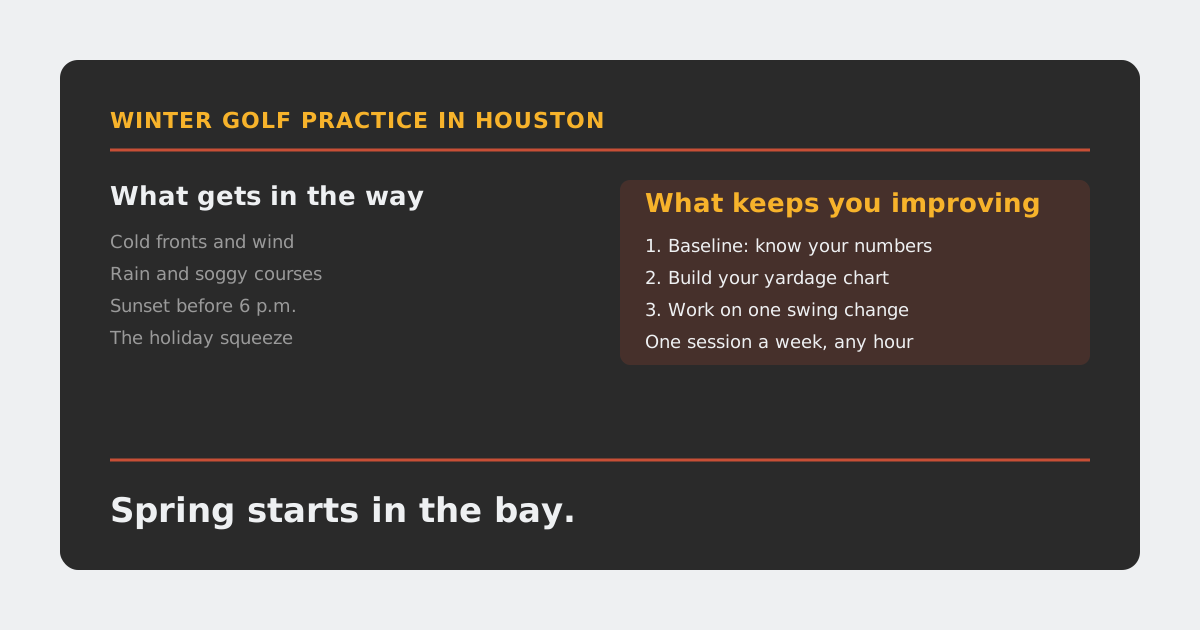
Four things that interrupt winter practice
Cold fronts and wind
A Texas cold front can drop the temperature twenty degrees in an afternoon and bring a stiff north wind with it. Plenty of us will happily play through that. But a 40-degree morning is also a bad day to try to groove a swing change, because stiff muscles and heavy layers change how you move. Indoors, you can work on mechanics at a comfortable temperature and save the hardy rounds for the weekends you want them.
Rain, and the days after it
Houston rain is not shy, and soggy courses take time to recover. When the forecast turns, a scheduled session in a bay keeps your routine intact instead of letting a weather week become a no-golf week.
The early sunset
Daylight saving time ends on Sunday, November 1, 2026, and from then on the sun sets before 6 p.m. in Houston. That is the end of the easy after-work nine holes for most people. It is also the point where a lot of golfers go quiet until March. Bays do not care what time the sun sets, so a Tuesday evening practice session is exactly as bright as a Saturday morning one.
The holiday squeeze
Between Thanksgiving, school breaks and family travel, free blocks of time get smaller and stranger. Short, focused sessions fit those gaps better than a four-hour commitment to a full round.
If any of those sound familiar, you are in good company. The fix is not to try harder. It is to make practice easy enough to survive a busy month.
What the off-season is actually for
Instead of "keep hitting balls," give each stretch of the winter a job. A simple three-block plan works for most golfers, whatever your handicap.
Block one: get your baseline (now through mid-November)
Spend one session finding out what your swing is actually doing. Hit a dozen shots with a few clubs and look at the basics: club speed, ball speed, carry distance and how tightly your shots group. Our beginner's guide to golf simulator data explains each number in plain language. You do not need to fix anything yet. You are drawing the map.
Block two: build your numbers (late November through December)
This is the perfect season for the unglamorous work that saves strokes in spring. Build a real yardage chart using our club gapping guide, and pay special attention to your wedges. Knowing your actual 50, 75 and 100-yard carries is worth more than any new driver, and it is work that fits neatly into those short holiday windows.
Block three: work on one swing change (January and February)
If there is one thing you want to change, a slice, a steep downswing, an inconsistent strike, winter is the time to try, because you are not under pressure to shoot a score the next day. Pick a single focus and use the screen as feedback. Our guide to fixing a slice with simulator data is a good example of how to turn numbers into a plan. Changes feel worse before they feel better, and the off-season is the kindest place to be a little worse for a few weeks.
If you would like company while you work through any of these blocks, our team is happy to help you read the screen. Book a bay online and bring the clubs you actually play.
A weekly rhythm you can actually keep
The most common reason winter practice fails is that the plan is too big. A plan that asks for three sessions a week lasts until the first busy week. This one asks for less:
- One focused session a week, 45 to 60 minutes. Use the structure in our 60-minute practice drills plan so you never stand there wondering what to hit next.
- One short top-up when life allows, 20 to 30 minutes. Hit your three or four most-used clubs and check your numbers against your chart.
- One real round when the weather cooperates. Take your yardage card with you. That is the whole point of the practice.
That is roughly two hours a week at the outside, and it is plenty. Consistency beats volume, especially when the calendar is working against you.
Keep it social
Practice gets easier when other people are involved. A bay is rented by the hour, not by the person, so bringing a friend or two splits the cost and gives you an extra set of eyes on your swing. Plenty of our regulars build a standing weekly session with a playing partner so that nobody can talk themselves out of it on a cold night.
If you like a bit of friendly competition, our fall league page shows how we run Wednesday-night play: two-person teams, a rotating format each week and handicaps so every skill level can compete. After a session, there is canned beer and wine in the lounge during staffed hours, and you are welcome to bring your own food. It is a clubhouse in spirit as much as in name, and the winter months are when it feels most like one.
Make it automatic with 24/7 access
The easiest habit to keep is the one with the fewest steps. Our bays are open around the clock, so you book online through Whoosh, receive a door code shortly before your session, and let yourself in. There is nothing to call ahead for and no waiting on someone to unlock the door. If your only free hour is 6 a.m. before work or 9 p.m. after the kids are down, that hour works. Our guide to 24/7 golf simulator access explains exactly how it works, including the quick one-time setup on your first visit.
Common questions about winter golf practice
Is winter a bad time to play golf in Houston?
Not at all. Cooler months are some of the best for playing outdoors in Southeast Texas. A simulator simply fills in the gaps: cold snaps, rainy weeks and evenings after the sun goes down.
How often should I practice in the off-season?
One focused session a week, plus a short top-up when you can, is enough for most golfers to hold their progress and make a change or two. Regular and short beats rare and long.
I am newer to golf. Is this plan for me?
Yes. The three blocks work at any level, and the baseline session is a friendly way to learn what the numbers mean. We provide loaner clubs at no charge, and our team is glad to help with the screen.
What does a session cost?
Open bays start at $25 an hour Monday to Thursday off-peak, and private bays start at $35. Rates are per bay, not per person. Current rates are on our play and pricing page, and if you plan to practice every week, our memberships are worth a look.
Do I need a membership to book?
No. Anyone can book a bay online, including after-hours sessions. Your first visit includes a short one-time setup during staffed hours.
Spring starts in the bay
The golfers who look sharp in March are usually the ones who kept going in January. You do not need a heroic schedule, just a plan, a comfortable place to carry it out and a reason to show up. We are at 19059 Champion Forest Drive in Spring, a couple of minutes from Gleannloch Pines, with six Uneekor XO2 bays and a team that is happy to help. Book a bay, bring your bag, and let's make this winter count. Building community through golf, one cold-front session at a time.